Textured Art Workshop: How to Make a Textured Painting, Step by Step
How a textured painting is made and which materials you need: the steps, timing, group size and planning tips for a textured art workshop for company teams.
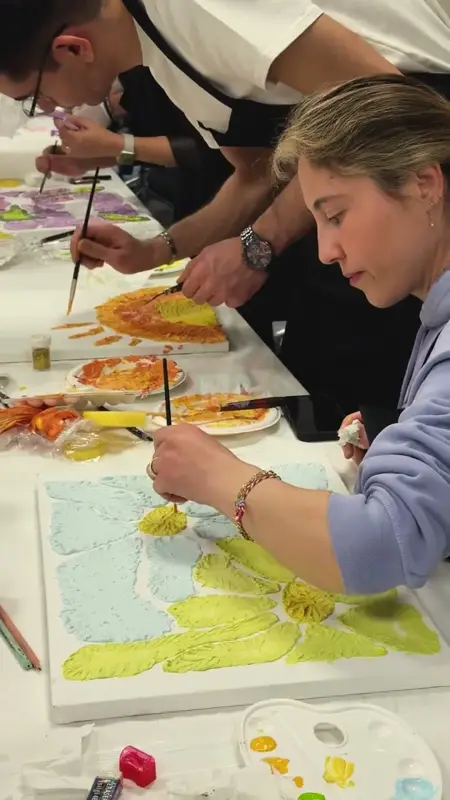
A textured painting is a three-dimensional artwork made by spreading modelling paste or a similar filler onto canvas with a palette knife to build a raised surface, then colouring that surface with acrylic paint once it dries. A textured art workshop lets a team go through this process together with an instructor, with no experience needed.
What materials do you need for textured art?
In the video the tables are covered with black protective sheets and each participant has a white canvas in front of them. Next to it are palette knives with different tips, a notched scraper, a sponge, gloves, a palette and acrylic paints. The basic list:
- Canvas (stretched or canvas board)
- Modelling paste; a plaster-based filler can be used instead
- Palette knife set and notched scraper
- Acrylic paints, brushes and a palette
- Sand, natural stones, glitter and decorative objects
- Gloves, sponge and a protective table cover
How do you make a textured painting?
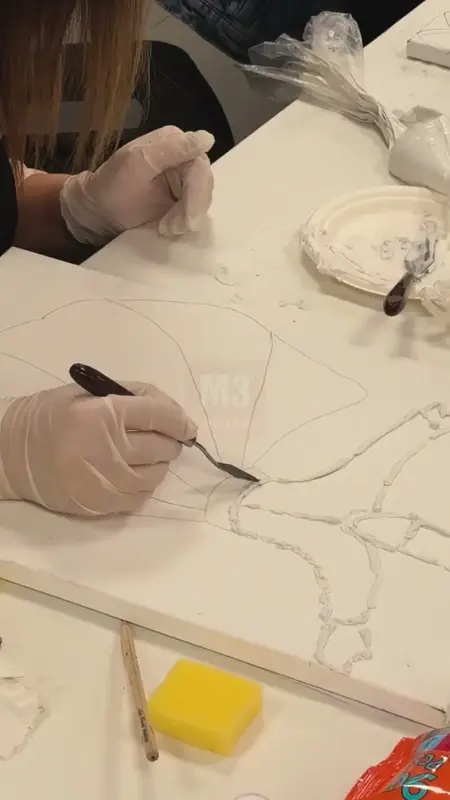
- Sketch: draw a simple design on the canvas in pencil; flowers, leaves or abstract shapes work well.
- Texture: spread modelling paste over and inside the lines with a palette knife and shape the edges with its tip.
- Drying: pause while the texture firms up; in the workshop we fill this time with quick-drying products and conversation.
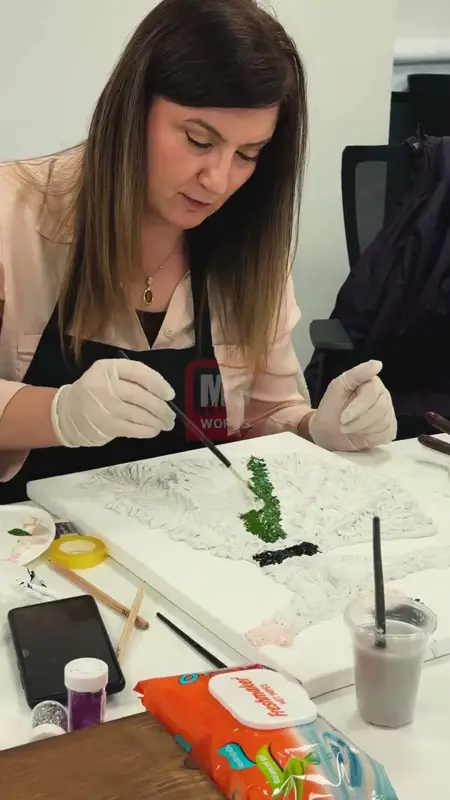
- Colour: paint the raised surface with acrylics, working the colour into the grooves with the tip of a brush.
- Finishing touch: add detail with glitter, sand or stones, then sign the piece.
Why choose a textured art workshop for a company event?
The rhythm of working with a palette knife is calming; phones stay on the table and conversation opens up on its own. No art background is needed, because texture forgives mistakes and every painting turns out different. Everyone leaves with a lasting piece, so the event stays visible at the office or at home long after. The Textured Art Workshop is planned for groups of 10 to 100 people and runs 60 to 120 minutes. To compare different workshops, see our guide to choosing a workshop.
The main price factors are headcount, canvas size, duration, city and venue, the range of materials, and personalisation requests such as corporate colours or a logo.
Planning tip: set aside space where paintings can be carried flat at the end of the event. We choose canvas size with this in mind; medium canvases fit the workshop time and look good on an office wall. Agreeing on a shared theme, such as company colours or a season, turns all the paintings into an impressive exhibition when hung side by side.
Frequently Asked Questions
If you are planning a calm but productive art break for your team, contact us and we will design everything from canvas size to colour palette together.
Start with 5 short questions: we'll prepare a custom quote in under 24 hours.