How to Plan a Kick-off Meeting: A Step-by-Step Guide
Turn your season opener from just another slide day into an experience your team remembers all year: the plan for balancing agenda, venue, content and activities.
A kick-off meeting is the day a company officially launches its new season: goals are announced, strategy is laid out, and the whole team gathers around the same story. A well-designed kick-off sets the energy for the next six months. A poorly designed one becomes a day lost between slides and forgotten by lunchtime.
As a team that has delivered more than 8500 corporate events over 20 years, we see one clear pattern: the kick-offs people remember are the ones that balance presentation with experience. This guide walks through the practical steps of building that balance.
1. Nail down the message first
What is your kick-off's one-sentence message? "This is our growth year", "we became one team", "meet our new brand"... That sentence is the filter for every decision; from venue selection and stage design to activity format and giveaways. A kick-off without a message is a meeting with an agenda but no story.
2. Build the agenda around the 45-minute rule
Adult attention drops after roughly 45 minutes of uninterrupted presentation. The ideal kick-off agenda places a breather, an interactive segment or a format change between every 45-60 minute content block.
- Opening (15 min): high-energy intro, the story of the day; save the CEO speech for the second block; let the room warm up first.
- Vision and goals (45 min): the year's core message, the numbers, the strategy.
- Interactive break (30-60 min): a department or team competition, a quick team game, or a quiz with prizes.
- Department presentations (45 min): short, templated, strictly timed.
- Lunch break (60-90 min): standing format, arranged to encourage mingling.
- Team experience (2-3 hours): the part of the day people will remember, more on this below.
- Closing and awards (30 min): tie the day's summary to an emotion.
3. Weave the team experience into the day
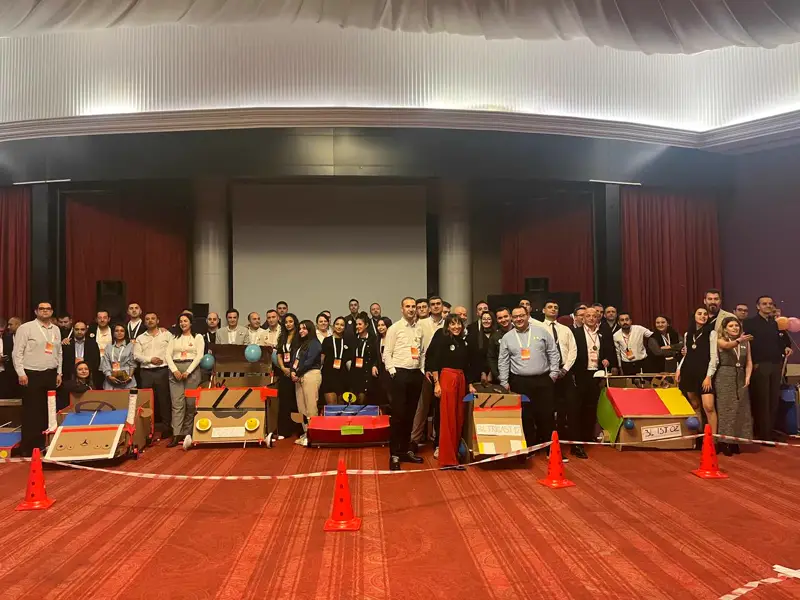
The most commonly wasted part of any kick-off is the afternoon: energy dips, phones come out. A team activity placed exactly here reinforces the message and turns the day from a 'meeting' into an 'experience'. Indoors, a format like the Company Orchestra brings everyone into the same rhythm; at a hotel or campus, a competition like M3 Challenge adds a friendly edge to cross-department rivalry; in the city center, the classic Define Avı (Treasure Hunt) delivers every time. Aligning the format with your message matters more than making it flashy.
4. If you're planning a dealer meeting
Organizing a dealer meeting works differently from an internal team kick-off: the participants are your business partners, not your employees. The agenda needs as much 'hospitality' as it needs product and target presentations. In overnight programs, don't leave the first evening unstructured; a light, non-competitive icebreaker activity visibly boosts the next day's productivity. And always bring the awards segment onto the stage; dealers remember being announced in the spotlight.
5. Don't wrap up without measuring
Within 48 hours of closing, send a 3-question survey: what was the message of the day, which part was most valuable, what should change next year. If the response rate exceeds 50%, your kick-off did its job. A kick-off you don't measure repeats the same mistakes every year.
Frequently Asked Questions
Start with 5 short questions: we'll prepare a custom quote in under 24 hours.