Hard Hat Painting: A Team Workshop for Safety Week
How to run a hard hat painting activity, why it works for safety week and what to watch out for: flow, duration, safety notes and budget factors.
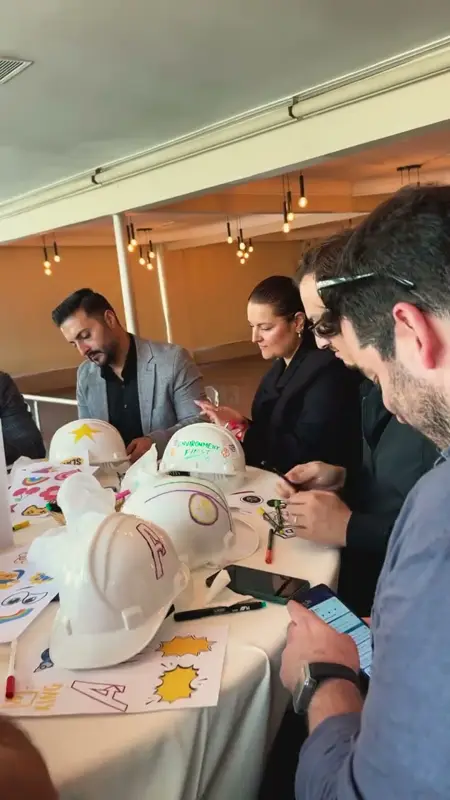
Hard hat painting is a workplace safety activity in which teams personalise white safety helmets with pens, stickers and slogans, putting the safety message into their own words. Instead of making people memorise rules, it asks each participant a question: what does safety mean to you? The answer goes on the hard hat and returns to the site with its owner.
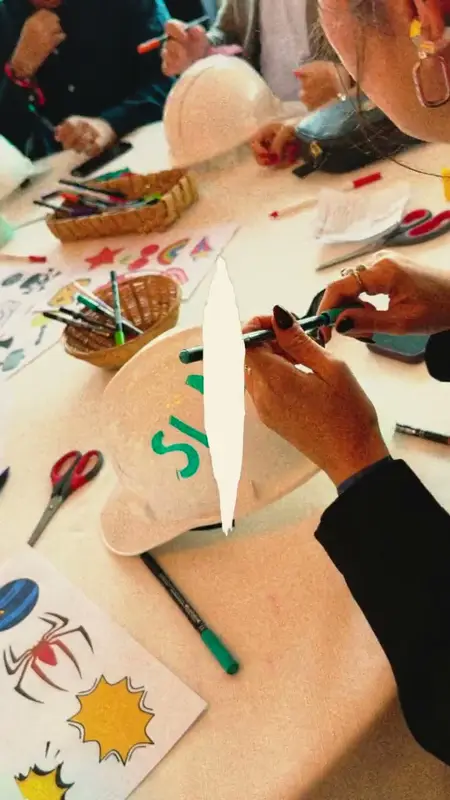
In the video below there are white hard hats, coloured pens, scissors and sticker sheets on round tables. Some teams write 'Environment First' on their hats, others add comic-book burst effects and warning symbols.
Why should a workplace safety event be different?
Safety training often consists of slides, forms and signatures; information is delivered but little sticks. Hard hat painting turns that information into a lived experience. Participants choose their own message, make their own design and then wear that hard hat every day. This small sense of ownership is exactly what safety culture needs most: seeing the rule as one's own rather than someone else's.
In Türkiye, Occupational Health and Safety Week is held every year from 4 to 10 May. Hard hat painting is a natural activity for that week, as well as for site openings, zero-accident celebrations and new employee orientations.
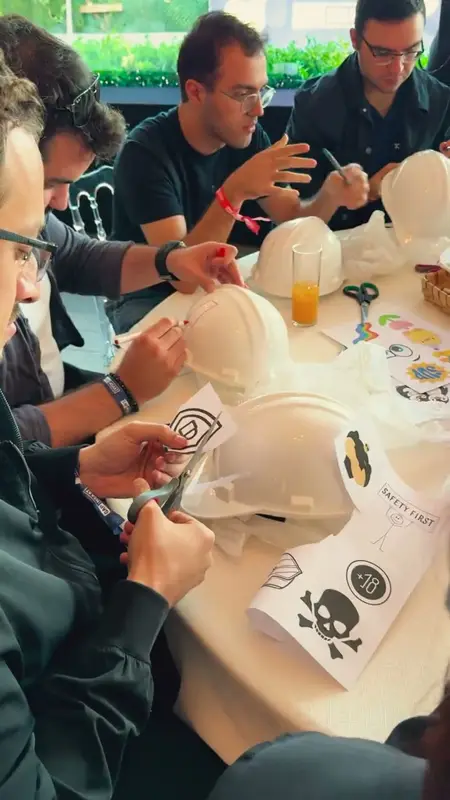
How does a hard hat painting activity work?
- Opening: a short talk sets the theme of the day, such as the company's safety goals or the safety message of the year.
- Idea round: each table discusses its message and agrees on a single slogan or symbol.
- Design: hard hats are decorated with permanent pens, stickers and templates. A personal name or nickname can be added.
- Presentation: each table explains its hard hat and the story behind the message in one minute.
- Display and vote: the hard hats are lined up and votes are cast for the best message and most creative design.
What should you watch out for when painting hard hats?
- Painting should be limited to the outer shell; the inside, headband and suspension system should not be touched.
- Solvent-based paints and thinners that could damage the shell material should not be used.
- Manufacturer labels and standard markings should not be covered.
- For hard hats that will actually be worn on site, approval from the company's safety specialist should be obtained; if preferred, painted hard hats are kept as keepsakes and display pieces only.
Which companies and groups is it suitable for?
Besides field-heavy sectors such as construction, energy, manufacturing and logistics, it suits office teams who visit sites and engineering units. Because it brings office and field staff to the same table, it also helps departments get to know each other. For teams that enjoy personalisation workshops, our Tote Bag & T-Shirt Painting Workshop follows similar logic, and our guide to choosing a workshop shows which workshop fits which group.
What does the cost depend on?
The budget depends on the number of participants, whether hard hats are supplied or the company's own are used, pen and sticker sets, stickers printed with company-specific slogans and logos, duration, city and venue setup.
Frequently Asked Questions
If you would like to plan hard hat painting for your safety week or site event, contact us and we will shape the message and flow together.
Start with 5 short questions: we'll prepare a custom quote in under 24 hours.