Simple Machines Activity: Build a Chain Reaction as a Team
How a simple machines activity works, what a chain reaction machine is and how to build a Rube Goldberg machine: flow, tips, group size and budget.
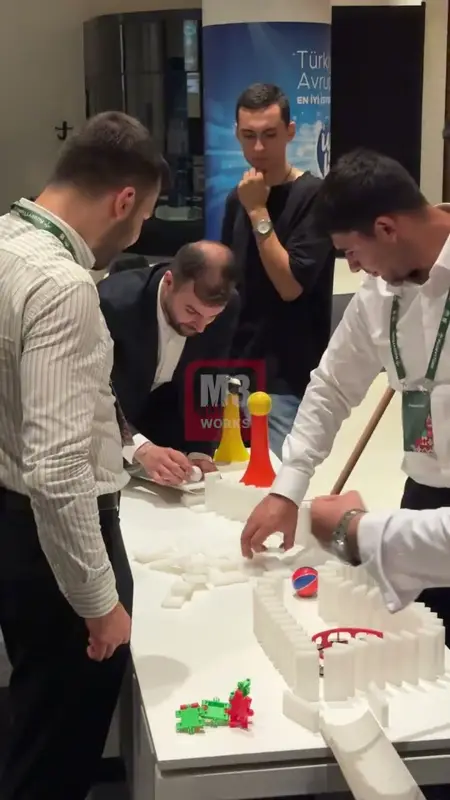
A simple machines activity is a team challenge in which teams build small contraptions using simple machine principles such as levers, inclined planes and pulleys, then link them into a single chain reaction machine. Known around the world as a Rube Goldberg machine, the idea is to complete a simple task through a deliberately long and fun chain: a ball knocks over dominoes, the dominoes push a lever, the lever releases a car down a ramp.
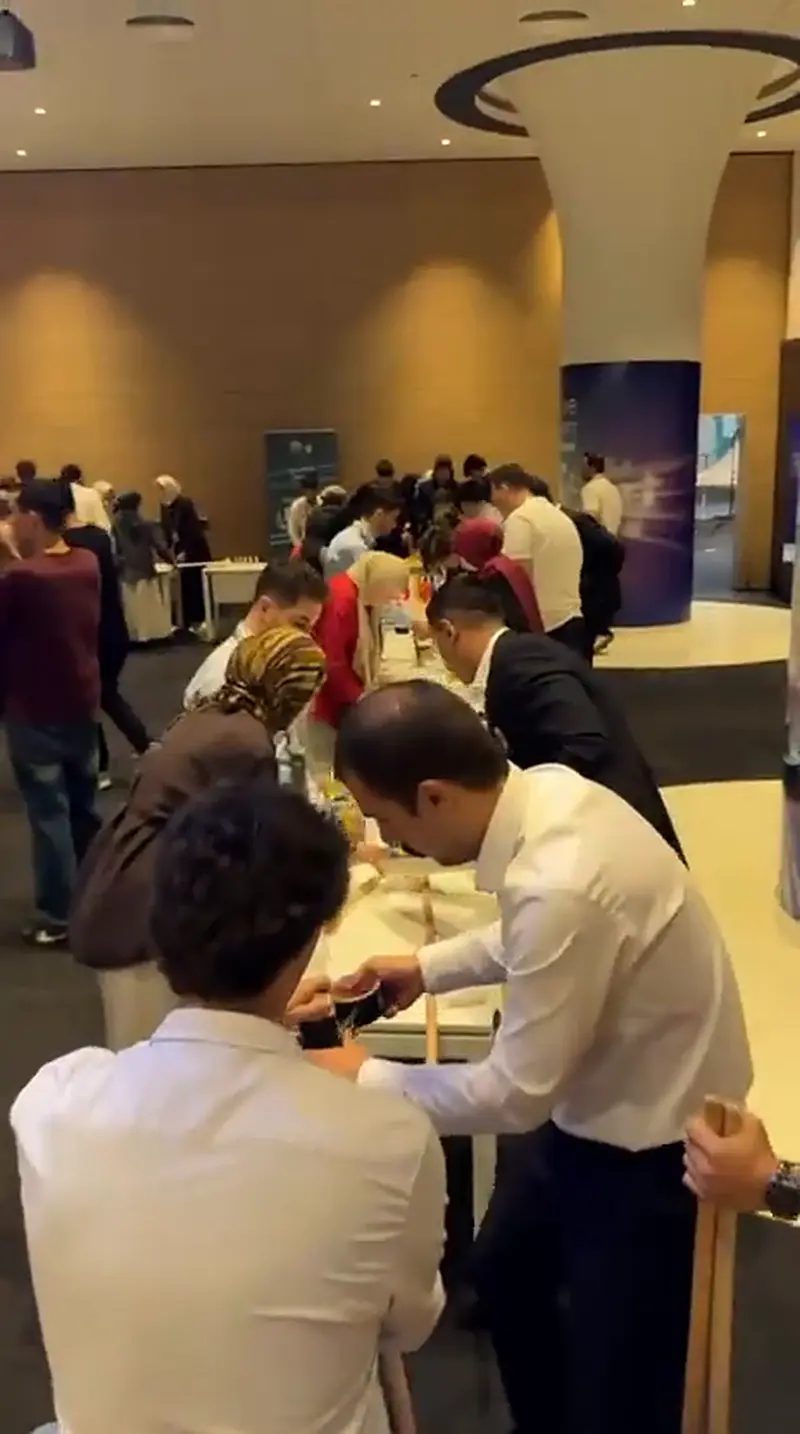
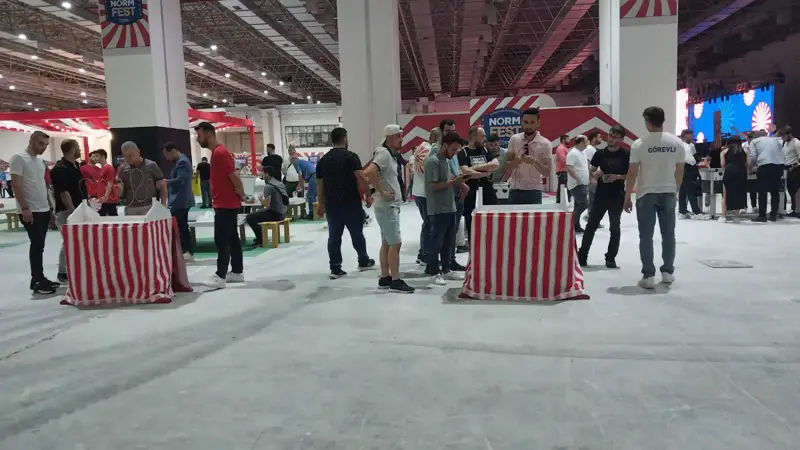
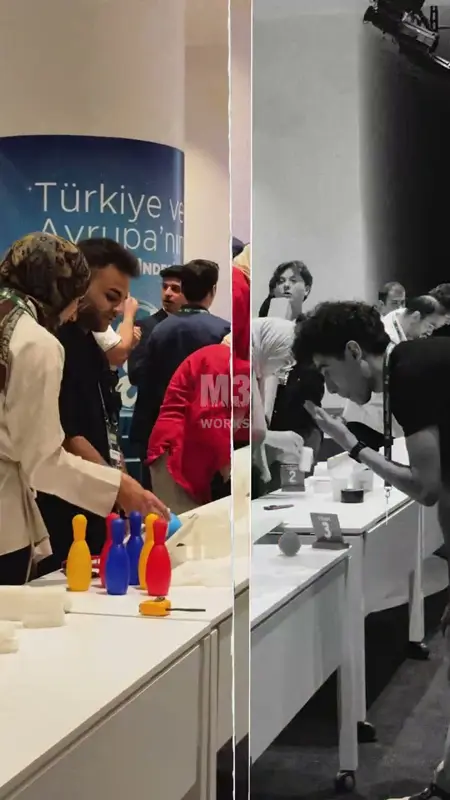
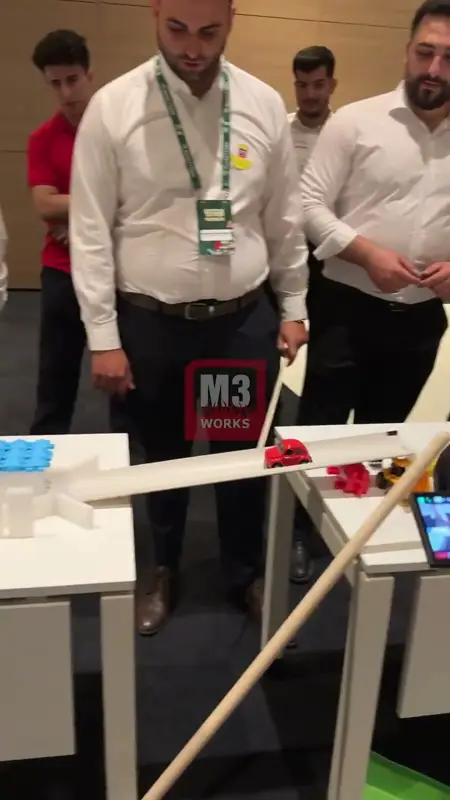
In the video below the facilitator explains the task from the stage, then teams build their sections on long tables with dominoes, ramps, bowling pins, balls and toy cars. At the finale everyone holds their breath as the chain passes from one table to the next.
What is a chain reaction machine?
A chain reaction is a series of events in which each event triggers the next. At the event this idea becomes a physical contraption: each team builds its own section, whose start connects to the previous team's end and whose end connects to the next team's start. Even if your own section works perfectly, the chain stops if the connection point fails. That is why the activity is one of the most tangible metaphors for cross-department communication and end-to-end process management.
How does a simple machines activity work?
- Briefing: the facilitator explains simple machine principles and the task; the start and end points of the chain are set.
- Design: each team plans which machines to use in its section and allocates its resources.
- Build and test: contraptions are built, tested one by one and debugged.
- Connection: teams meet their neighbours and tune the handover points together.
- Finale: the chain is triggered from the start and the whole room watches the machine run from end to end.
Tips for making the machine work
- Keep the gap between dominoes at roughly half the height of a tile; too wide a gap breaks the chain.
- Test every handover point at least three times; you do not want surprises at the finale.
- Build in safety breaks: leave gaps in domino lines while building and close them once testing is done.
- Make one person the connection lead; having a single person talk to the neighbouring team prevents confusion.
Why does it work as a corporate event?
Incredible Machines: Simple Machines brings engineering intuition, creativity and resource management to the same table without requiring technical knowledge. It runs for 5 to 500 people in 90 to 180 minutes, and the more teams there are, the grander the finale. If you are looking for a more fluid version built purely around a marble track, Marble Run is a good alternative. We described a day where we combined this activity with a rhythm workshop here.
What does the cost depend on?
The budget depends on the number of participants and teams, duration, room layout and number of tables, the scope of the material kits, the size of the facilitator and field team, sound and visuals for the finale, the city and installation conditions.
Frequently Asked Questions
If you would like to build your own chain reaction machine with your team, contact us and we will design the task and finale around your group.
Start with 5 short questions: we'll prepare a custom quote in under 24 hours.