Robot Wars Event: Build Cardboard Robots and Battle in the Arena
How does a robot wars event work? The corporate workshop where teams design cardboard robots and battle them in an arena, plus materials and build tips.
A robot wars event is a team activity in which teams design and build their own fighting robots from limited materials, then pit those robots against each other in an arena. Winning takes more than creativity: it takes planning, resource management and a good division of labour.
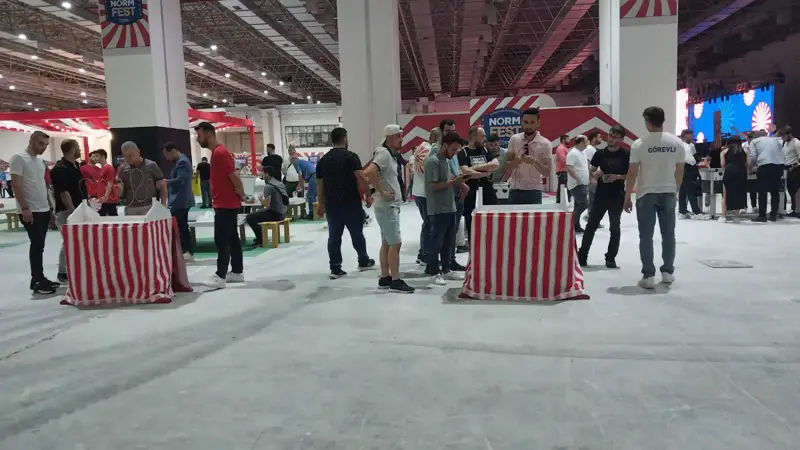
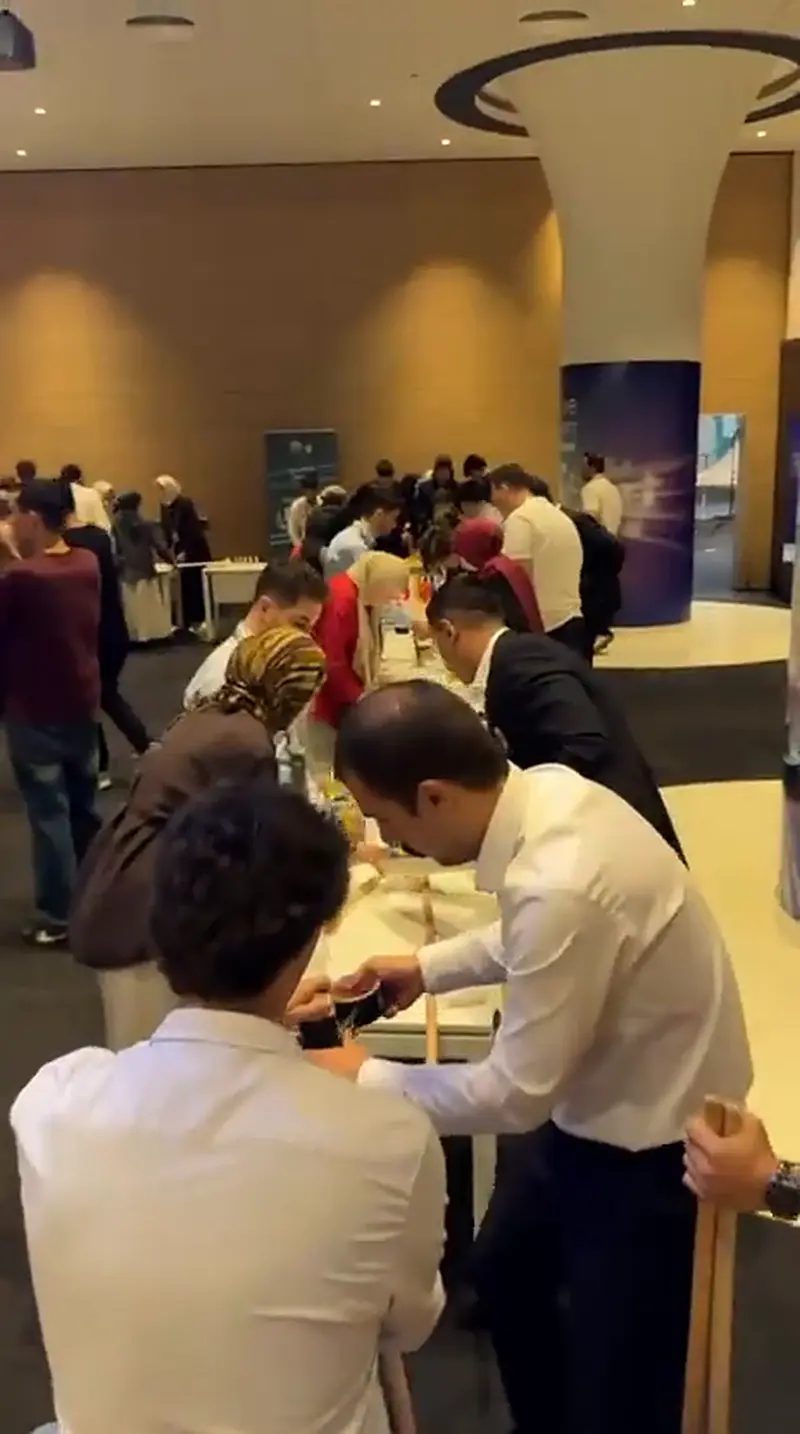
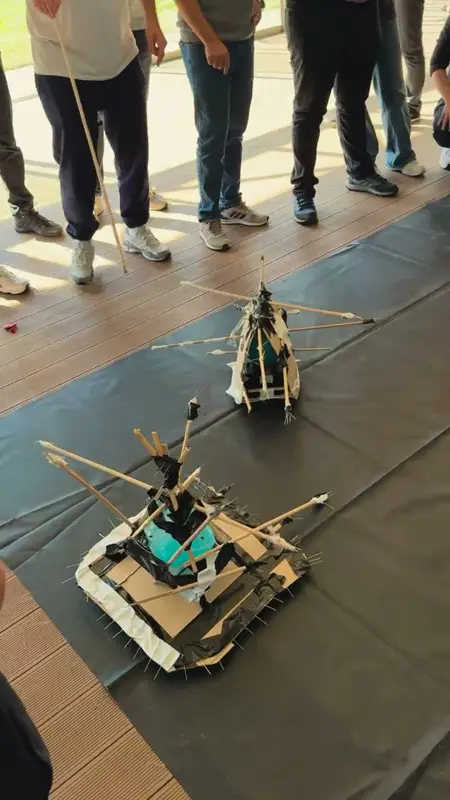
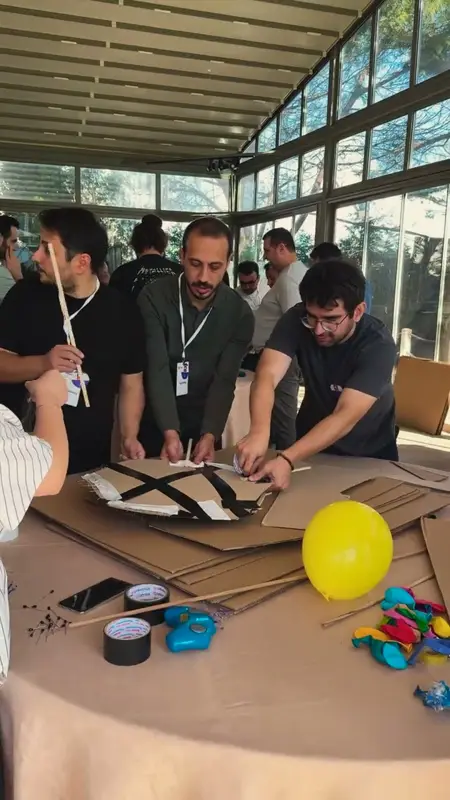
In the video below you can see a workshop we set up in a glass-walled event hall: teams gathered around round tables build their robots from cardboard, sticks, tape and balloons, and the finale takes place in an arena with a black floor.
How does a robot wars event work?
- Mission and rules: teams learn the robot's size limits, the arena rules and the winning condition.
- Getting resources: in the Robot Wars format, robot parts are acquired through strategic planning and smart resource management; the team decides how much to invest in which material.
- Design: the team sketches the robot's body, movement, defence and attack arms, and shares out the tasks.
- Build: the robot is constructed with cardboard, wooden sticks, tape and glue; the time limit locks everyone onto the same goal.
- Arena: robots meet in match-ups, competing on both design and power, and the strongest wins the tournament.

How do you build a robot from cardboard?
The basis of a cardboard robot is a solid body. Corrugated cardboard is folded or glued in layers to make a rigid chassis. Wooden sticks are used both to reinforce the frame and to create attack arms. Tape and hot glue secure the joints. In the robots in the video you can see teams building long arms from sticks, armour plates from cardboard and target points from balloons.
- Keep the centre of gravity low: a low-bodied robot is harder to tip over in the arena.
- Chassis first, decoration later: when time runs short, durability matters more than looks.
- Armour the weak spots: protect the areas an opponent will target with an extra layer of cardboard.
- Test early: push and pull the robot on the table before the match to find parts that come loose.
Who is robot wars right for?
No technical knowledge is needed; our facilitators run the process and the real difference shows up in team planning. That is why it works in every department, from engineering and R&D teams to sales and finance. It is planned for 10 to 200 people, lasting 60 to 180 minutes, and takes place indoors; we set up the arena in your meeting room or hotel hall.
The main cost factors are the number of participants and teams, the duration, the scope of the material set, the arena setup, prize and trophy choices, and the city where the event takes place. For other formats built on making things and chain-reaction thinking, see our team games guide.
Frequently Asked Questions
If you would like to set up a robot arena for your team, contact us and we will plan the rules, the material set and the tournament flow around your group together.
Start with 5 short questions: we'll prepare a custom quote in under 24 hours.