In-House Team Competition: Running It for Large Groups in a Ballroom
How to design an in-house team competition for a large group: ballroom stations, scoring, timing and fitting it into a training programme.
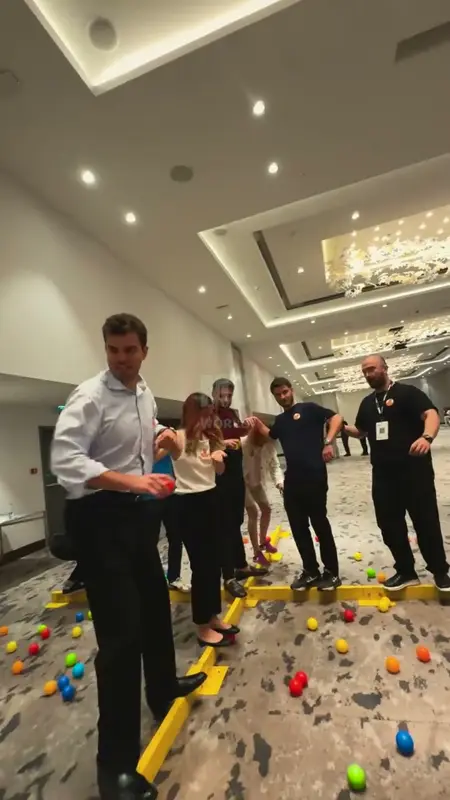
An in-house team competition is an event where employees of the same organisation are split into mixed teams and collect points in short games that test different skills. With large groups, the secret is that everyone plays at the same time and the outcome depends on the whole room's performance, not just one winning team.
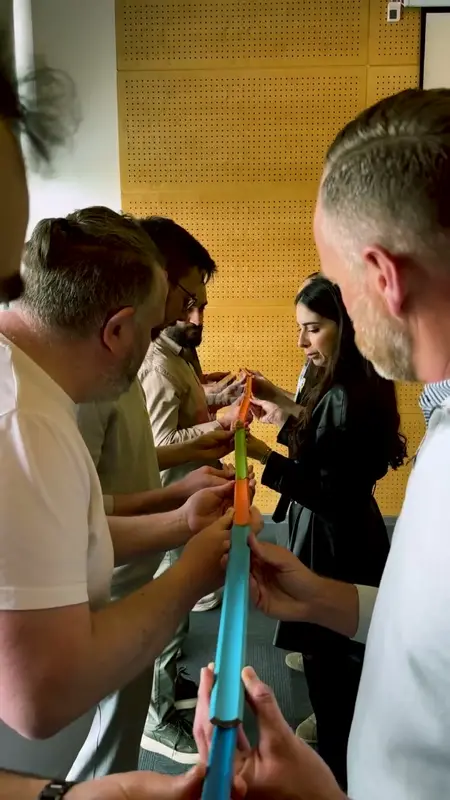
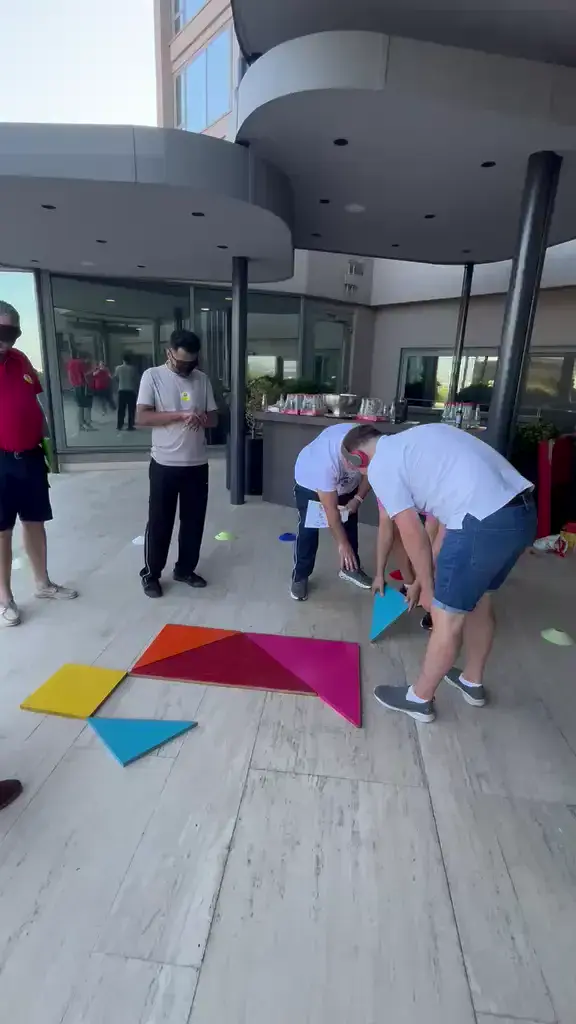
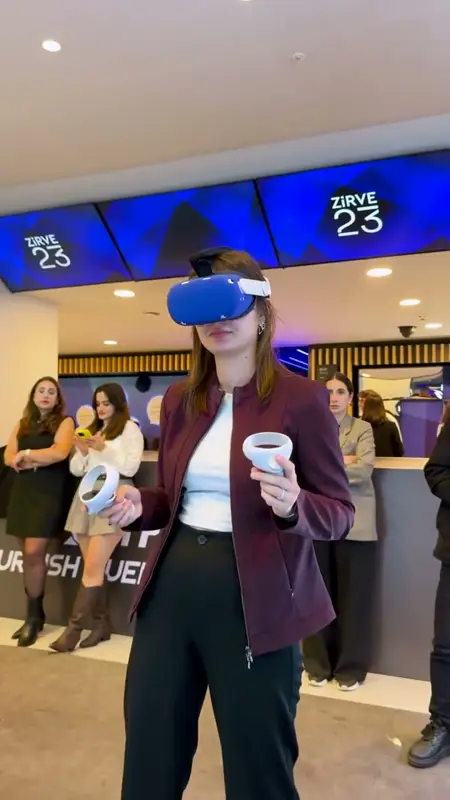
The video shows the M3 Challenge we set up as part of a Deloitte training programme for new managers. The event takes place in a hotel ballroom, divided into several stations with colourful balls on the floor, yellow balance pieces, players wearing headphones and giant tangram pieces.
How do you design a team competition?
- Clarify the goal: bonding, cross-department communication, or reinforcing a topic from the training?
- Mix the teams: splitting up people from the same department turns the competition into a way to meet.
- Vary the stations: balance games that need physical coordination, communication, problem solving and strategy.
- Keep scoring transparent: a visible scoreboard lets teams choose which game to go for.
- Plan the close: results are announced together and a short debrief links the game to working life.
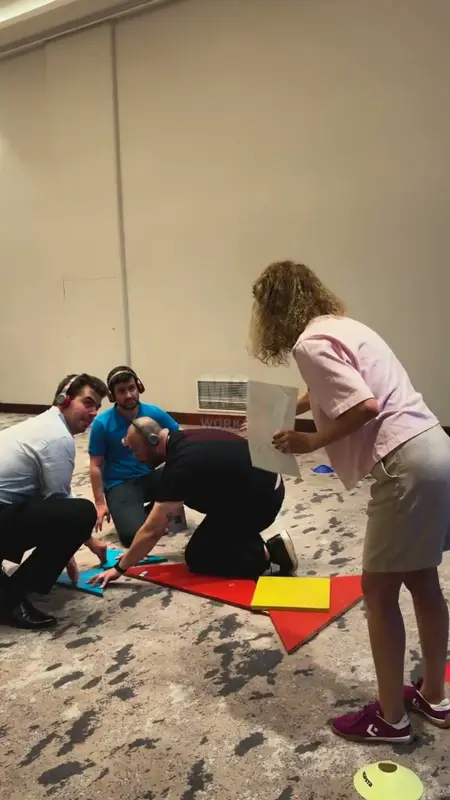
How do you run an in-house competition for a large group?
In M3 Challenge, reaching the summit requires not only your own team's success but proportional success from the other teams too. That rule works very well in crowded rooms: teams are rivals, yet they also depend on each other, just as departments need to work in sync. The game is played in teams of 5 to 15 people, up to 10 teams, and planned for 90 to 180 minutes.
- Each station has a game leader, and rules are explained in a single short sentence.
- The number of stations is matched to the number of teams so nobody waits.
- If it sits in the middle of a training programme, the duration can be shortened to fit between sessions.
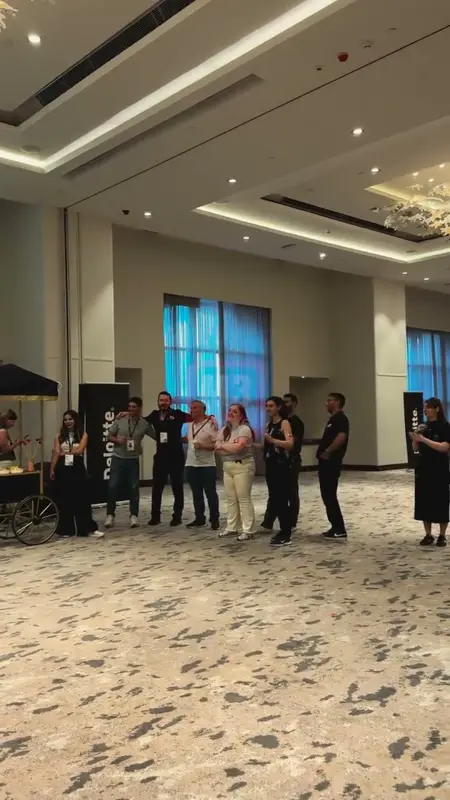
- The finale happens where everyone can see it, like the moment in the video when teams line up in front of the brand banners.
What affects the cost of an in-house team competition?
The main factors are headcount and number of teams, event length, city and venue, number of stations, how much setup time the ballroom allows, and any materials prepared in your corporate identity. We confirm pricing after a site check and programme call. You can see a different venue layout in the M3 Challenge we ran on a terrace.
Frequently Asked Questions
If you are planning an in-house team competition for a large group, contact us and we will design the stations around your venue and programme.
Start with 5 short questions: we'll prepare a custom quote in under 24 hours.