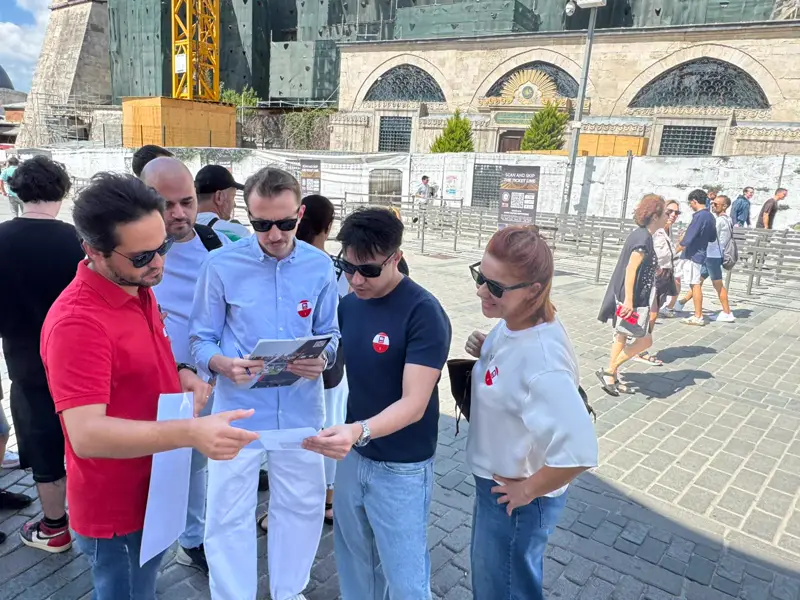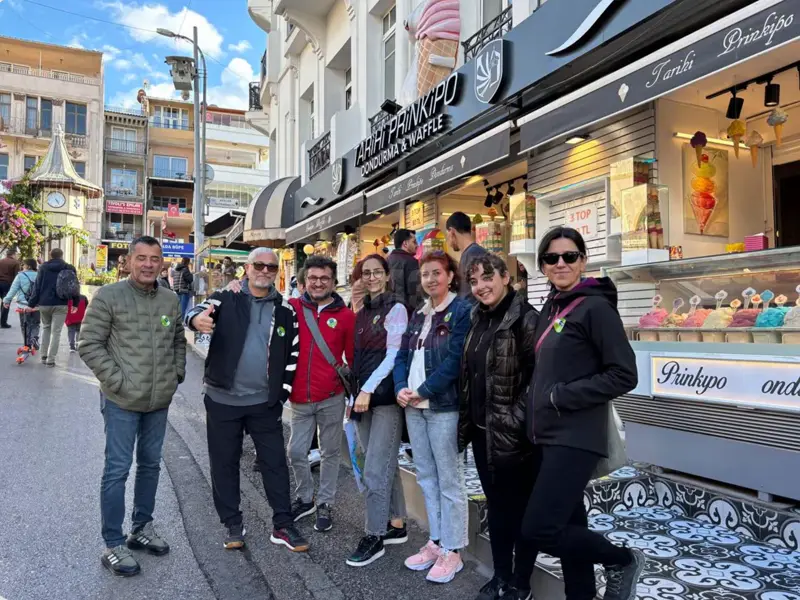
Sultanahmet Treasure Hunt Route: A Planning Guide for Company Groups
How to plan a corporate treasure hunt route in Sultanahmet: choosing stops, walking distance, timing and season, managing crowds and common questions.
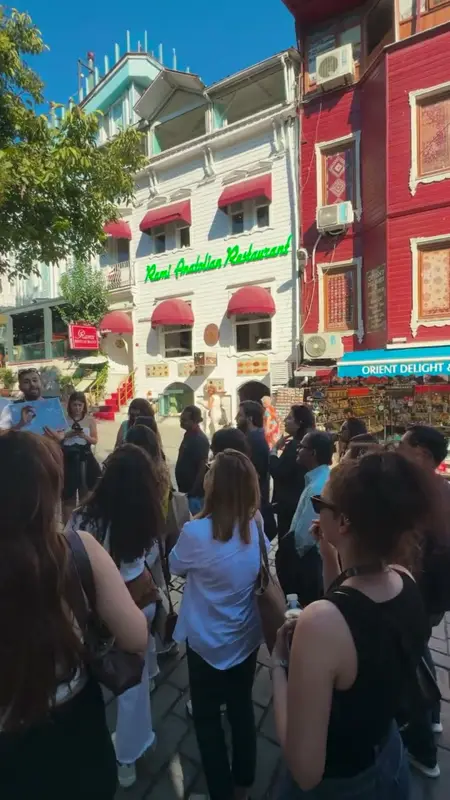
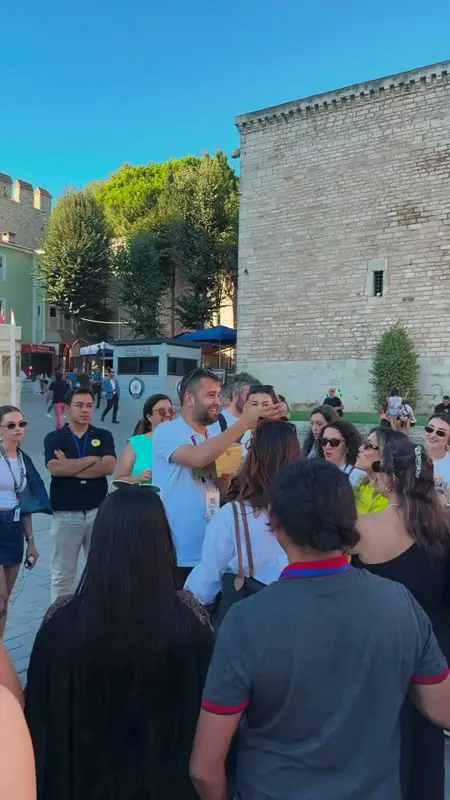
A Sultanahmet treasure hunt route is a game course that turns the monuments, squares and streets of the historic peninsula, all within walking distance, into clue stops that teams complete in 2 to 3 hours. A good route introduces the city and forces the team to make decisions together.
This is not an event story but a planning guide. We have told the story of our events in the area in Sultanahmet Treasure Hunt and Treasure Hunt in Sultanahmet; here we focus on how a route is drawn.
What is a treasure hunt and how is it played?
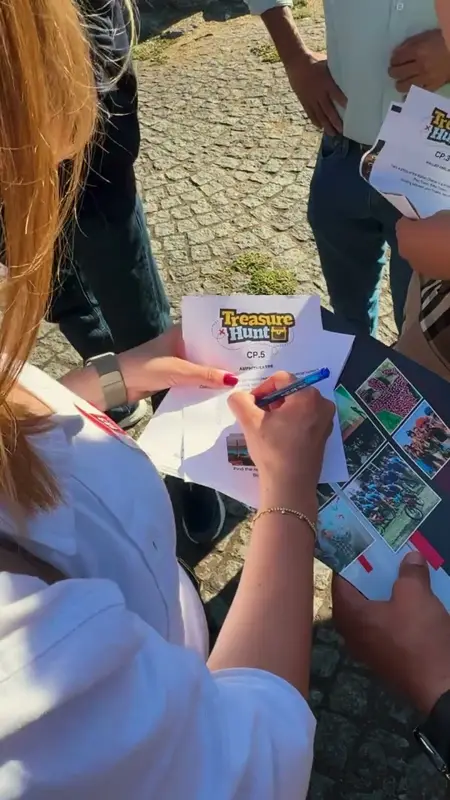
In the corporate version, teams set off from a starting point, solve a clue, riddle or task at each stop, and the right answer leads them to the next point. As the video shows, each stop has a numbered checkpoint card; the team writes its answer on the card, completes the photo task sheet and collects points. The winner is decided by points, not speed alone, which keeps speed and smart thinking in balance.
How do you plan a Sultanahmet route?
- Start and finish: a meeting point that is easy to reach and gather at, and a venue where the group can sit down for the final.
- Stops: chosen from points within walking distance such as the Hagia Sophia area, Sultanahmet Square (the Hippodrome), the Obelisk and the German Fountain, the Arasta Bazaar, the outer courtyard of Topkapı Palace and Gülhane Park.
- Distance: total walking is kept to a few kilometres; slopes and stairs are balanced along the route.
- Clue type: each stop links to an inscription, a piece of history, an architectural detail or a conversation with local shopkeepers.
- Parallel routes: with large groups, teams visit the same points in different orders so no single stop gets crowded.
- Site survey: the route is walked on site before the event; closures, construction and peak hours are checked.
What time and season suit a Sultanahmet tour?
Spring and autumn are the most comfortable seasons. In summer we build the route around shaded points and add water breaks and short rest stops. Stops near mosques are placed with prayer times in mind, and museum opening hours and closing days are checked in advance. Because the area is busy with tourists, we design tasks that do not disturb other visitors and assign a field referee or guide to every team.
Paper cards or tablets?
The set-up in the video is a classic Treasure Hunt played with paper checkpoint cards. The larger format, run on tablets with QR codes and enriched with themed scenarios, is our Treasure Hunt Adventure. You can see how the digital version works at our tablet-based event in a park, and a different part of the city in our Taksim treasure hunt story. For how a hunt is designed from start to finish, our guide the anatomy of a treasure hunt is a good companion. Cost depends mostly on group size, duration, language options, the number of guides, the final venue and any themed storyline.
Frequently Asked Questions
Shall we draw a route on the historic peninsula for your team? Contact us.
Start with 5 short questions: we'll prepare a custom quote in under 24 hours.