Wheelchair Donation as a Corporate Social Responsibility Project
How to plan a company event where teams assemble and donate wheelchairs: the steps of the CSR project, group size, timing and what shapes the budget.
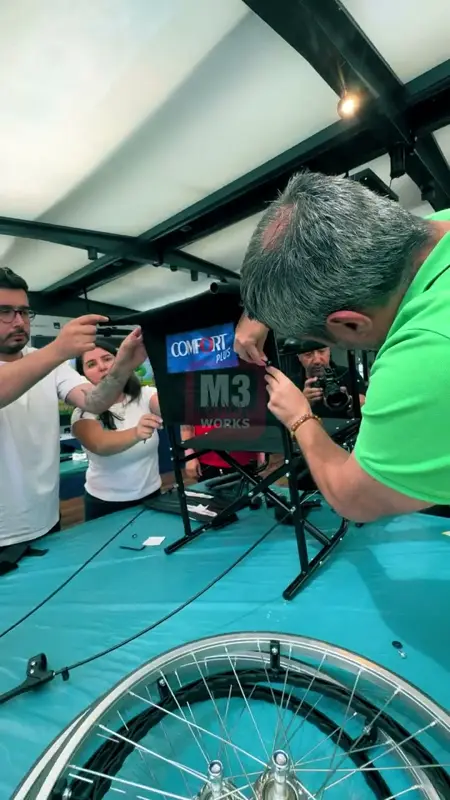
A wheelchair donation CSR project is a company event where employees work in teams to assemble disassembled wheelchairs and present them to people in need, producing teamwork and a tangible good deed on the same day. The donation is not a bank transfer; the team completes it with its own hands.
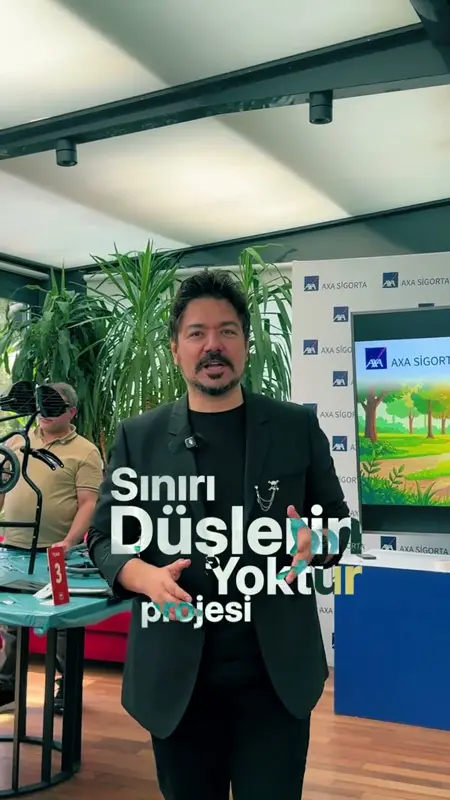
We run this format as the Wheelchair Factory. The event in the video below took place in front of AXA Sigorta boards, with the project title 'Düşlerin Sınırı Yoktur' (Dreams Have No Limits) on screen: numbered team tables, turquoise covers, wheels and frame parts.
How do you run a CSR project? The event day step by step
- Opening: the purpose of the project and who will receive the wheelchairs are briefly explained, and participants are split into teams.
- Short training: the moderator shows the parts, the assembly order and the safety adjustments. No special skills are needed.
- Assembly: each team joins the frame, backrest, wheels and brakes at its own table. The team decides how to divide the work.
- Check and adjustment: the moderator inspects every wheelchair before handover.
- Personal touch and letter: the team decorates the chair and writes a letter to the person who will receive it.
- Handover: the chairs are displayed together and the donation handover is scheduled according to the programme.
In the quiz version the parts do not arrive at the table directly: teams earn a wheel, a brake or a backrest by answering questions correctly. For competitive teams this lifts the energy, and the result still ends in a donation.
Why is it a good example of corporate social responsibility?
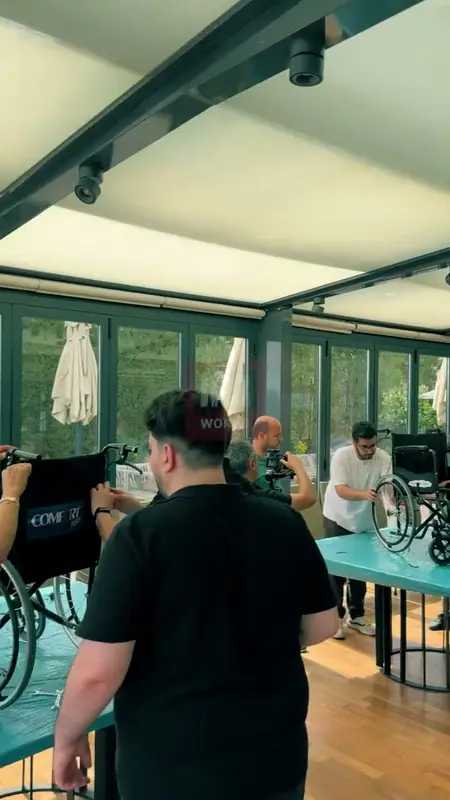
The most common problem we hear about company CSR projects is that employees only learn about them from an announcement email. In this format participants produce the result themselves: they discuss which part goes where, pass each other tools and test the chair together when it is done. Communication and division of labour work naturally because there is a measurable output in front of them.
- Tangible result: wheelchairs that can be counted and handed over at the end of the day.
- A role for everyone: assembly, adjustment, decoration and letter writing suit different skills.
- Storytelling: the project can be shared in internal communications and corporate reporting.
- Inclusive: physical effort is low, so age and fitness are no barrier.
How many people, how long, and what affects the cost?
The programme is planned as a half day, 2 to 3 hours, for groups of 10 to 500. A meeting room, hotel foyer, covered terrace or office is enough; we bring the tables and assembly area. The main budget factors are the number and model of wheelchairs, the number of participants, the city and venue, the quiz format and any brand personalisation. Our Bicycle Factory, where teams build bikes for children, works on the same idea and can be an alternative in the same programme. To place the event inside a wider employee engagement plan, see our event strategy guide for HR.
Frequently Asked Questions
If you would like to plan a meaningful social responsibility day with your team, contact us.
Start with 5 short questions: we'll prepare a custom quote in under 24 hours.